From 3-minute mental health tests to 30-second vaccine checks—discover 7 breakthrough medical innovations moving from lab to your daily life.
READING_TIME:
12 minutes
—
Picture this: You walk into a clinic, give a quick saliva sample, and within three minutes, you have insights into your mental health that once required weeks of appointments and expensive testing. Or imagine getting a vaccine quality-checked in 30 seconds instead of days, ensuring what goes into your body is exactly what it should be.
This isn’t science fiction. It’s science fact—and it’s happening right now. ✨
The gap between laboratory discovery and everyday experience is shrinking faster than ever before. Let me walk you through seven breakthrough findings that are transforming from complex research into tools you can actually use, feel, and benefit from in your own life.
1. 🧠 The Three-Minute Mental Health Check That Costs Less Than Your Coffee
Mental health diagnosis has always felt like navigating a maze blindfolded. Appointments, questionnaires, trial medications—it’s exhausting before treatment even begins.
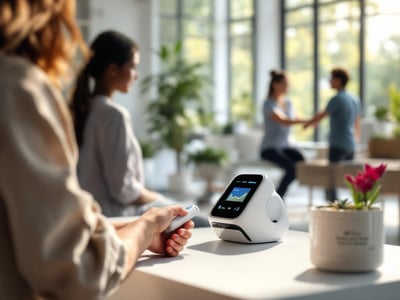
But researchers have developed something remarkably simple: a portable biosensor that analyzes your saliva for BDNF, a protein linked to depression, schizophrenia, and bipolar disorder.
The specs are impressive:
– Flexible, portable design
– Costs approximately $2 per test
– Delivers results in under three minutes
– No blood draws or lab appointments required
What makes this truly revolutionary isn’t just the technology—it’s the accessibility. For the first time, mental health screening could become as routine as checking your blood pressure. Imagine catching early warning signs before a full crisis develops, or tracking how well your treatment is actually working in real-time.
The practical application? Within the next few years, you might keep one of these sensors in your medicine cabinet, using it the same way you’d use a thermometer—a simple check-in tool that helps you understand what’s happening inside your body before problems escalate.
2. 🎯 Cancer Treatment That Turns Tumor Cells Into Their Own Destroyers
Here’s something that sounds almost too elegant to be true: scientists have achieved complete leukemia elimination in preclinical trials using a triple-drug combination that reprograms cancer cells to essentially call in their own destruction.
The breakthrough involves triggering a specific type of cell death called necroptosis. Unlike normal cell death, which happens quietly, necroptosis is loud—it releases molecular signals that wake up your immune system and point it directly at the tumor. The cancer cells become beacons, advertising their location to the very system designed to eliminate them.
What you need to know: This approach combines three already-approved drugs in a new way, which typically means faster paths to human trials and eventual treatment. For anyone with B-cell lymphomas or leukemias in their family history, this represents genuine hope—not someday hope, but potentially within-a-few-years hope.
The real-world impact extends beyond cancer treatment itself. This research demonstrates that we can be smarter about fighting disease by **working with our body’s existing systems** rather than just attacking problems with brute force.
3. 💉 Vaccine Quality Testing Goes From Days to 30 Seconds
Every vaccine dose should be perfect, but testing them has traditionally been slow and expensive. Purdue University researchers changed that equation entirely with a tool that assesses vaccine quality in 30 seconds using Raman spectroscopy—essentially giving viral particles a laser-based fingerprint check as they flow through production.
Why this matters to you:
Faster, cheaper quality control means several things:
– ✅ Vaccines can be produced more efficiently, potentially lowering costs
– ✅ Quality issues get caught immediately instead of after entire batches are produced
– ✅ In emergency situations—like pandemics—production can scale up without sacrificing safety checks
This technology represents a broader shift in medicine: moving from slow, offline testing to **real-time monitoring**. It’s the difference between checking your bank balance once a month versus having instant notifications. One approach catches problems eventually; the other prevents them from happening.
4. 🦠 Fighting Drug-Resistant Tuberculosis With Molecular Precision
Tuberculosis kills millions annually, and drug-resistant strains have been winning the battle. But researchers developed CMX410, a compound that attacks TB through an entirely new mechanism—it permanently binds to an enzyme called Pks13 that bacteria need to build their cell walls.
The results are remarkable:
– Tested against 66 different TB strains worldwide
– Effective against all strains, including multidrug-resistant varieties
– Design prevents bacteria from developing resistance
– Doesn’t disrupt your body’s helpful microbiome
The practical takeaway: If you’ve ever known someone who endured months of harsh TB treatment, this research points toward shorter, more tolerable regimens. The approach also demonstrates how precision medicine—targeting specific molecular mechanisms—can overcome problems that brute-force antibiotic approaches can’t solve.
5. 🏃 Body Mechanics Reviews: Your Personal Movement MOT
You probably get your car serviced regularly, but when was the last time you had your movement patterns checked? Movement specialists are now recommending regular body mechanics reviews—professional assessments of how you actually move through space.
Small asymmetries compound over time. A slight leg-length difference, collapsed arches, or uneven shoulders change how forces load through your knees, hips, and lower back. These issues are invisible until they’re painful, but they’re detectable and correctable early.
Here’s your action plan:
📋 Professional Assessment:
Book a movement screen with a physical therapist or qualified trainer. They’ll check leg length, pelvic alignment, foot pressure distribution, and movement patterns.
📋 Monthly Self-Audits:
– Stand barefoot and check your arches
– Balance on one leg for 30 seconds
– Film yourself doing a squat from the side
The beauty of this approach is its simplicity. You’re not waiting for pain to tell you something’s wrong—you’re maintaining your body’s mechanics the same way you’d maintain any complex system you depend on daily.
6. 🌱 The 30-Plant Weekly Challenge for Metabolic Health
Forget counting calories or macros for a moment. Research published in The American Journal of Clinical Nutrition suggests that dietary richness —specifically, eating 30 different plant species per week — is linked to healthier blood markers and better long-term health outcomes.
This isn’t about eating more; it’s about eating wider.
What counts toward your 30:
– 🌿 Herbs and spices
– 🥜 Nuts and seeds
– 🫘 Legumes
– 🌾 Whole grains
– 🍎 Fruits and vegetables
– 🍵 Seaweeds and teas
– 🫙 Fermented foods
The variety itself appears to be what matters, likely because different plants feed different beneficial bacteria in your gut.
Make it practical:
✨ Create a “seed sprinkle” mixing flax, chia, sesame, and hemp seeds—one spoonful gives you four species
✨ Keep a running list on your phone of plants you’ve eaten each week
✨ Treat it like a game: can you hit 30 without really trying?
One study found that replacing just 560 grams of meat per week with legumes lowered cholesterol, reduced body weight slightly, and increased fiber intake—all without consciously restricting calories. The mechanism isn’t deprivation; it’s diversification.
7. 🔊 Sound and Light Therapy for Brain Health
Perhaps the most accessible breakthrough involves something almost absurdly simple: 40Hz light and sound stimulation. A two-year study found that daily exposure to specific frequencies of light and sound helped slow cognitive decline in Alzheimer’s patients and reduced levels of tau protein—a key marker of neurodegeneration.
The protocol is straightforward:
– One hour daily of 40Hz flickering light and pulsing sound
– Non-invasive and side-effect-free
– Can be done at home with specialized devices
The mechanism appears to work by synchronizing brain waves in a way that helps clear out toxic proteins and supports healthy neural function. While research is ongoing, the safety profile and accessibility make this an intriguing option for anyone concerned about cognitive health.
What makes this particularly exciting: Unlike many brain health interventions that require medications or invasive procedures, this approach uses your brain’s natural rhythms. It’s a reminder that sometimes the most powerful interventions work by enhancing what your body already does well.
—
## CONCLUSION:
The common thread running through these seven breakthroughs? Accessibility, simplicity, and working with your body rather than against it.
We’re witnessing a fundamental shift in healthcare—from complex, expensive interventions available to few, to elegant solutions that could benefit many. A $2 mental health test. Thirty-second vaccine verification. Cancer treatments that recruit your immune system. Movement checks as routine as dental cleanings. Dietary diversity over restriction. Sound and light for brain health.
These aren’t incremental improvements. They’re paradigm shifts that recognize something important: the best medical innovations aren’t necessarily the most complex—they’re the ones people can actually access and use.
The gap between laboratory and living room is closing. These breakthroughs remind us that the future of healthcare isn’t just about discovering new science—it’s about making that science work in real life, for real people, in ways that fit into the messy, complicated, beautiful reality of being human.
CTA:
Which of these breakthroughs resonates most with you? Share in the comments below, and let us know if you’ve tried any similar approaches to managing your health. If you found this valuable, subscribe to stay updated on emerging health innovations that are moving from research to reality.
Your health journey is unique—let’s explore these possibilities together. 💪
—
Have questions about implementing any of these approaches? Drop them below, and let’s discuss how cutting-edge research can become part of your everyday wellness routine.
This blog is compiled from 18 sources.
Please note: Me, AI and underlying material can make mistakes.

Leave a comment