READING_TIME: 12 minutes
—
You’ve probably heard that exercise is good for you. But what if the relationship between physical activity and longevity goes far deeper than most people realize?
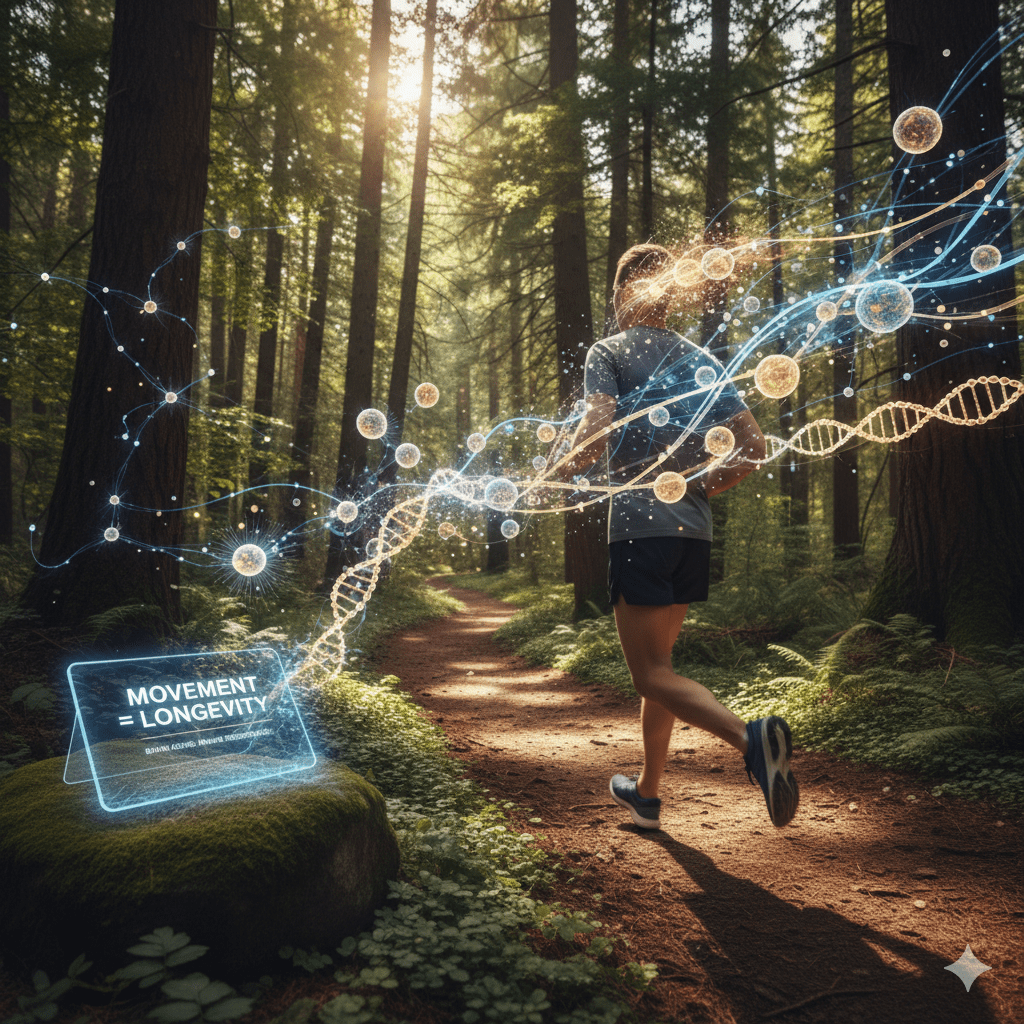
Recent research reveals that how you move your body today directly shapes how your brain ages, how your immune system responds to threats, and whether you’ll maintain independence in your later years.
Let’s explore the fascinating science behind why sports and structured physical activity might be your most powerful longevity tool. 💪
Your Muscles Are Talking to Your Brain 🧠
Here’s something that might surprise you: the amount of muscle you carry on your body predicts how young your brain looks on the inside.
A groundbreaking study using whole-body MRI scans on over 1,100 adults uncovered a remarkable connection. People with more muscle mass and less deep visceral fat—the kind that wraps around your organs—showed brain tissue that appeared biologically younger. Interestingly, subcutaneous fat, the kind you can pinch under your skin, didn’t matter nearly as much.
This isn’t just correlation. The relationship appears causal: building muscle and reducing visceral fat may be one of the most powerful interventions for lowering long-term cognitive decline risk and preserving mental capacity as you age.
Think about what this means practically. Every time you challenge your muscles through resistance training, you’re not just building strength for today. You’re investing in the biological age of your brain decades from now.
The Hidden Fat That Ages Your Brain
Not all body fat affects longevity equally. While general weight management matters, the location of fat tissue makes a dramatic difference in how your body ages.
Deep visceral fat, the kind that accumulates around your internal organs, acts like a metabolic troublemaker. It releases inflammatory compounds that circulate throughout your body, including your brain. This chronic low-grade inflammation accelerates cellular aging and contributes to cognitive decline.
Physical activity, particularly the kind that builds muscle, helps your body preferentially burn this dangerous visceral fat. Regular exercise improves insulin sensitivity, which helps prevent the accumulation of new visceral fat deposits.
It’s a virtuous cycle: more muscle leads to better metabolic health, which protects your brain, which helps you maintain the motivation and cognitive function to keep exercising.
The research is clear: muscle mass serves as a critical marker of overall metabolic health, which in turn supports a healthier, younger brain. 🔄
The Inflammation Connection 🔥
One of the most fascinating discoveries in longevity research involves understanding how different lifestyle factors influence inflammation and how sports participation fits into this picture.
Your immune system ages just like the rest of your body. As it does, it tends to become more reactive and less discerning, creating chronic low-grade inflammation that drives many age-related diseases. This immune age may be one of the clearest windows into your biological age.
Here’s where it gets interesting: what you eat and how you move directly influence this immune aging process.
Research shows that consuming high amounts of free fructose—think soda and sweetened beverages—can temporarily make immune cells behave like older cells. They become more reactive, more inflamed, and less able to distinguish real threats from harmless stimuli. Even in healthy adults, a single high-fructose drink boosted receptors that sense bacterial toxins, priming cells to overreact.
Regular physical activity works in the opposite direction. Exercise helps maintain a balanced, youthful immune system. It reduces chronic inflammation, improves immune cell function, and helps your body mount appropriate responses to actual threats without the excessive reactivity that characterizes immune aging.
This is why the combination of regular sports participation and mindful nutrition creates such powerful synergy for longevity.
The Gut-Muscle-Longevity Triangle 🔺
Your gut microbiome, the trillions of bacteria living in your digestive system, produces compounds that profoundly influence your healthspan. One of the most important is butyrate, a short-chain fatty acid that prevents immune cells from entering senescence—the zombie-like state where cells stop dividing but don’t die.
Here’s the connection to physical activity: exercise influences the composition of your gut microbiome, promoting the growth of beneficial bacteria that produce butyrate and other longevity-supporting compounds.
Studies show that butyrate treatment prevents T cells from becoming senescent and reduces inflammatory molecule secretion. When researchers transplanted gut bacteria rich in butyrate from young mice to older ones, it prevented cellular aging in the recipients.
Regular physical activity supports this beneficial microbial ecosystem. Athletes consistently show greater microbial diversity and higher levels of butyrate-producing bacteria compared to sedentary individuals.
The pathway is elegant: exercise shapes your microbiome, your microbiome produces beneficial metabolites, and these metabolites help prevent the cellular aging that drives disease. ✨
Building the Right Kind of Strength 💪
Not all exercise delivers equal longevity benefits. The research increasingly points toward resistance training—activities that challenge your muscles to work against force—as particularly powerful.
A time-efficient approach that’s gaining scientific support involves high-intensity resistance training. Even single-set workouts, when performed to momentary muscle failure with proper form, can trigger significant adaptations that build muscle and reduce visceral fat.
The key principles include:
Progressive overload: Gradually increasing the challenge to your muscles over time
Compound movements: Exercises that work multiple muscle groups simultaneously
Adequate recovery: Giving muscles time to repair and grow stronger
Consistency: Regular training sessions spread throughout the week
You don’t need to spend hours in the gym. Research suggests that 20 to 30 minutes of focused resistance training, performed two to three times weekly, can deliver substantial benefits for muscle preservation, metabolic health, and brain aging.
The Cartilage and Joint Connection 🦴
As we age, maintaining joint health becomes crucial for sustaining an active lifestyle, which itself is essential for longevity. Recent research on enzyme inhibition offers fascinating insights into how we might preserve and even regenerate cartilage.
Studies on blocking the 15-PGDH enzyme show significant regenerative effects across multiple tissue types, particularly in reversing age-related muscle deterioration and cartilage damage associated with osteoarthritis. This enzyme increases two-fold with aging across tissues and directly impairs stem cell function in bone, nerve, blood, and cartilage regeneration.
Direct joint injection of 15-PGDH inhibitors has reversed cartilage thinning and restored functional articular cartilage in aged mice and injury models.
While we wait for these treatments to reach clinical application, the message is clear: protecting your joints through appropriate exercise, maintaining healthy body weight, and building supportive muscle around joints creates the foundation for decades of movement.
Beyond the Physical: Sports and Social Connection 🤝
Physical activity’s longevity benefits extend beyond the purely physiological. Sports participation, particularly in group settings, addresses another crucial longevity factor: social connection.
Your ability to build and maintain social connections is deeply rooted in something called interoception—your capacity to perceive your own internal state and sense signals like your heartbeat, breath, hunger, and tension.
Sports and physical activities naturally enhance interoceptive awareness. When you exercise, you become more attuned to your body’s signals. This heightened body awareness doesn’t just improve athletic performance. It strengthens your capacity for empathy and social connection, both of which are powerful predictors of longevity.
Team sports and group fitness activities combine the physical benefits of exercise with the longevity-enhancing effects of social engagement. You’re not just building muscle and cardiovascular fitness. You’re strengthening the social bonds that research consistently links to longer, healthier lives.
The Practical Path Forward 🛤️
Understanding the science is one thing. Applying it is another. Here’s how to translate these insights into actionable steps:
Start with resistance training: Prioritize activities that build and maintain muscle mass. This doesn’t necessarily mean a gym membership. Bodyweight exercises, resistance bands, or free weights at home can all be effective.
Focus on consistency over intensity: Regular moderate activity beats sporadic intense workouts. Find a sustainable rhythm that fits your life.
Protect your joints: Choose exercises appropriate for your current fitness level. Build supporting muscle around joints to reduce injury risk.
Combine movement with social connection: Join a sports league, fitness class, or walking group. The social benefits amplify the physical ones.
Mind your nutrition: Support your exercise efforts with whole foods and limit inflammatory foods like those high in free fructose.
Track your progress: Pay attention to how you feel, your energy levels, and your functional capacity rather than just aesthetic changes.
The Longevity Mindset Shift 🔄
Perhaps the most important takeaway from this research is a fundamental shift in how we think about exercise.
Physical activity isn’t just about looking better or feeling good today. It’s about preserving the biological systems that determine your quality of life decades from now. Your brain health, immune function, metabolic capacity, and physical independence all depend on the movement choices you make today.
Every workout is an investment in your future self. Every time you choose the stairs over the elevator, every time you lift something heavy, every time you get your heart rate up, you’re sending signals throughout your body that promote cellular health, reduce inflammation, and preserve youthful function.
The beauty of this approach is that it’s never too late to start. While earlier is better, research consistently shows that even people who begin exercising later in life experience significant benefits.
Your body is remarkably responsive to the signals you send it through movement. Start sending the right signals today. 🌟
CONCLUSION:
The science is clear: physical activity represents one of the most powerful interventions for extending both lifespan and healthspan. The connection between exercise and longevity operates through multiple pathways—from building muscle that protects brain health, to shaping a beneficial gut microbiome, to maintaining a youthful immune system. Resistance training appears particularly valuable, and you don’t need to spend hours exercising to see benefits. Combined with mindful nutrition and social connection, regular physical activity creates a foundation for decades of vitality and independence. The movement choices you make today directly influence how your body and brain will function in the years to come.
CTA:
What’s one change you can make this week to increase your physical activity? Whether it’s starting a simple resistance training routine, joining a local sports group, or simply taking more walks, share your commitment in the comments below. Your future self will thank you for the investment you make today.
This blog is compiled from 17 sources.
Please note: Me, AI and underlying material can make mistakes.

Leave a comment