READING_TIME: 12 minutes
—
The connection between diet and aging has never been more scientifically validated. Groundbreaking research now shows that nutrition transcends simple calorie counting or weight management. Instead, the foods you choose act as cellular messengers, orchestrating complex processes that determine immune resilience, metabolic intelligence, and how quickly your body ages.
Every meal you eat triggers cascading biochemical reactions throughout your body, influencing everything from how your brain ages to your baseline inflammation levels. Understanding these mechanisms empowers you to make food choices that actively slow biological aging.
CARBOHYDRATE MYTHS VS. METABOLIC REALITY 🧬
Nearly half of all Americans mistakenly believe protein serves as the body’s primary fuel source. This widespread misconception has created unnecessary carbohydrate fear while contributing to dangerously inadequate fiber intake across the population.
The scientific reality tells a different story. A comprehensive 30-year longitudinal study tracking dietary patterns and health outcomes confirmed that carbohydrates provide the majority of daily energy requirements plus essential B vitamins. The critical question isn’t whether to eat carbs, but rather which carbohydrates deserve a place on your plate.
The distinction matters profoundly for long-term health outcomes.
THE SMARTEST CARBOHYDRATE CHOICES 🥔
The healthiest carbohydrate sources deliver far more than energy. They provide minerals that directly regulate blood pressure, fiber that nourishes beneficial gut bacteria, and phytonutrients that shield cells from oxidative damage.
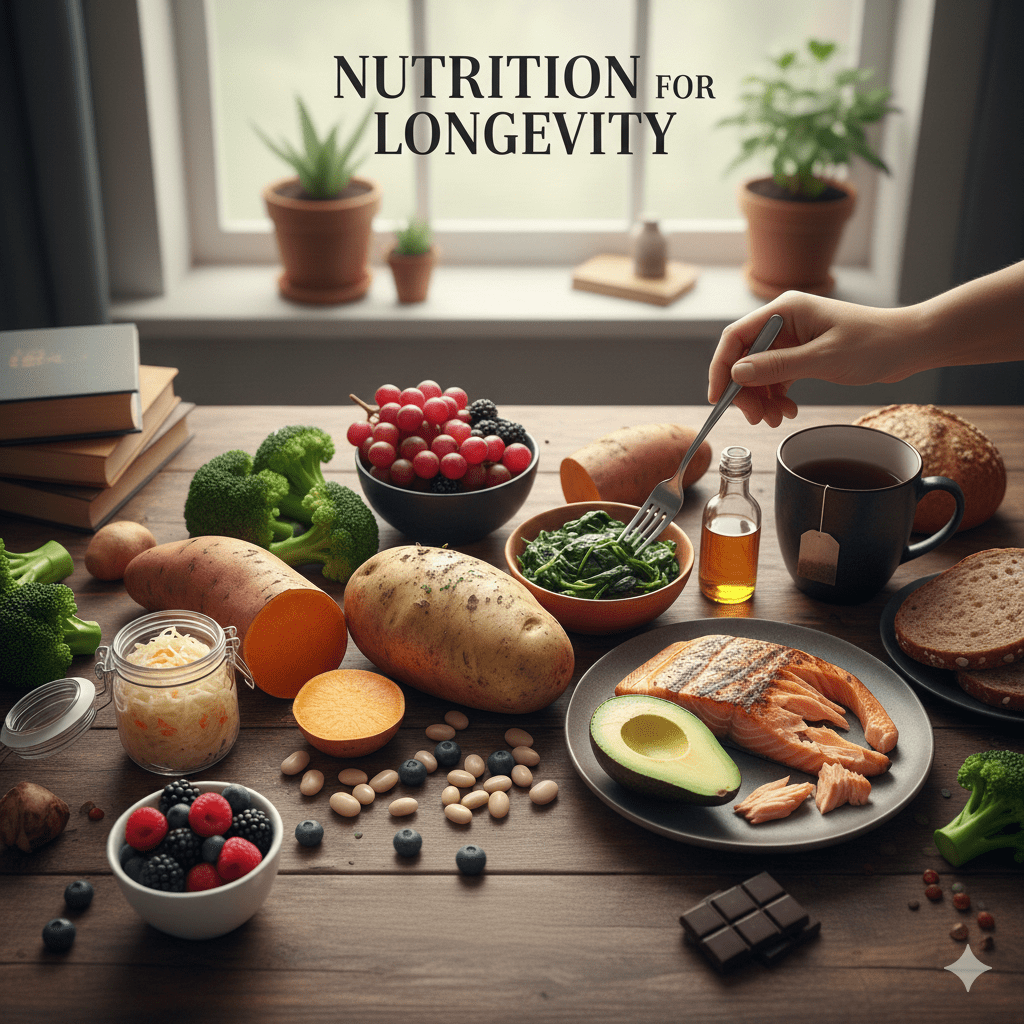
Prioritize these nutrient-dense options:
Whole potatoes containing 900mg potassium per large potato
Sweet potatoes providing 540mg potassium per medium serving
Legumes like white beans delivering 560mg per 100g
Leafy greens like cooked spinach offering 840mg per cup
Cruciferous vegetables like broccoli containing 450mg per cup
These foods represent nutritional powerhouses that support multiple longevity pathways simultaneously.
THE PRECISE POTASSIUM TARGET FOR BLOOD PRESSURE ❤️
A comprehensive meta-analysis examining 32 studies with over 1,200 participants identified an exact nutritional target for cardiovascular protection: 4.7 grams of potassium daily.
This specific amount demonstrated the strongest effect in reducing blood pressure, particularly among people with existing hypertension and high sodium intake. Fascinatingly, consuming significantly more potassium didn’t provide additional benefits and could even reverse the positive effects.
This finding illustrates a fundamental principle of nutrition science: more isn’t always better. Your body operates on precise biochemical ratios, and optimal health requires hitting specific targets rather than simply maximizing individual nutrients.
Reaching 4.7g of potassium demands intentional food choices but remains entirely achievable through whole foods. Combining an avocado (900mg), a large potato (900mg), a cup of cooked spinach (840mg), and several other fruits and vegetables throughout the day easily meets this threshold without supplementation.
HOW SUGAR RAPIDLY AGES YOUR IMMUNE SYSTEM ⚠️
One of the most striking recent discoveries involves fructose’s dramatic impact on immune cell behavior. When healthy adults consumed beverages high in free fructose—the type found in sodas and sweetened drinks—their immune cells began behaving like aged cells within hours.
The mechanism is remarkably precise: fructose increased receptors that detect bacterial toxins, priming immune cells to overreact. These cells became more inflamed, more reactive, and less discerning—all hallmark characteristics of immunosenescence, the progressive aging of the immune system.
Crucially, glucose didn’t produce this effect. This distinction matters tremendously because it points toward specific dietary interventions rather than blanket sugar avoidance.
Your immune system functions as one of the clearest windows into biological age. People with stronger, more balanced immune responses consistently demonstrate better health outcomes across multiple domains. Anything that makes immune cells more reactive and inflamed—even temporarily—can accelerate immune aging.
This research fundamentally reframes how we should think about sugary beverages. The damage isn’t primarily about calories or weight gain. It’s about accelerated immune aging occurring at the cellular level with every sweetened drink.
GUT BACTERIA AS LONGEVITY FACTORIES 🦠
The trillions of bacteria inhabiting your digestive system produce metabolites that profoundly influence health and aging trajectories. Recent research has identified butyrate—a compound produced by beneficial gut bacteria—as particularly important for preventing cellular aging.
Studies demonstrate that aging naturally reduces butyrate-producing bacteria in the gut, leading to cellular deterioration and increased inflammation throughout the body. But this decline isn’t inevitable or irreversible.
When researchers treated immune cells with butyrate, they prevented these cells from entering senescence (the aged, dysfunctional state that drives disease). The compound reduced inflammatory molecule secretion and blocked the pathways leading to cellular damage.
Even more compelling, transplanting gut bacteria from young mice rich in butyrate-producing species prevented cellular aging in older mice. This demonstrates that the relationship between gut bacteria and aging is causal, not merely correlational.
FOODS THAT SUPPORT BUTYRATE PRODUCTION 🌱
Resistant starch from cooked and cooled potatoes or rice
Prebiotic fibers from onions, garlic, and leeks
Fermented foods like yogurt, kefir, and sauerkraut
Whole grains and legumes
Diverse plant foods providing varied fiber types
The microbiome responds remarkably quickly to dietary changes. Shifting toward these foods can measurably alter gut bacterial composition within days, though sustained changes require consistent dietary patterns maintained over weeks and months.
THE MUSCLE-BRAIN CONNECTION 🧠
A groundbreaking study using whole-body MRI scans on over 1,100 adults revealed that muscle mass and body fat distribution directly influence brain aging. The more muscle people carried and the less deep visceral fat they stored, the younger their brains appeared biologically.
Importantly, subcutaneous fat—the kind directly under your skin—didn’t matter for brain aging. The critical factor was visceral fat, the deep abdominal fat that surrounds organs and drives metabolic dysfunction.
This finding connects nutrition to brain health through metabolic pathways. Visceral fat actively secretes inflammatory compounds that cross the blood-brain barrier and accelerate cognitive decline. Muscle tissue, conversely, functions as a metabolic sink that improves insulin sensitivity and reduces systemic inflammation.
NUTRITION STRATEGIES FOR THE MUSCLE-BRAIN AXIS 💪
Protein timing and distribution throughout the day supports muscle protein synthesis, particularly important as we age and become more resistant to muscle-building signals.
Anti-inflammatory foods like fatty fish, colorful vegetables, and polyphenol-rich foods reduce the chronic inflammation that drives both muscle loss and brain aging.
Adequate carbohydrates spare protein for muscle building rather than burning it for energy, while supporting the intense energy demands of both muscle and brain tissue.
PHARMACEUTICAL VALIDATION OF INFLAMMATION’S ROLE 💊
BGE-102, a once-daily drug targeting NLRP3—a molecular switch driving harmful inflammation—demonstrated something previous anti-inflammatory compounds couldn’t achieve: effective brain penetration at therapeutic doses.
In Phase 1 trials, the compound reached therapeutic levels in both blood and brain tissue while achieving 90-98% suppression of IL-1β, a key inflammatory protein linked to cardiovascular disease and metabolic dysfunction.
This matters for nutrition because it validates inflammation as a core driver of age-related disease. The fact that pharmaceutical companies are investing heavily in anti-inflammatory approaches underscores what nutritional science has been demonstrating: chronic inflammation accelerates aging across multiple organ systems.
DIETARY APPROACHES TO INFLAMMATION CONTROL 🐟
While waiting for pharmaceutical interventions, dietary approaches to inflammation control remain immediately accessible:
Omega-3 fatty acids from fatty fish directly compete with inflammatory omega-6 pathways, measurably reducing inflammatory markers in blood tests.
Polyphenols from berries, tea, and dark chocolate activate anti-inflammatory signaling pathways at the genetic level.
Fiber from diverse plant sources reduces gut permeability and the resulting inflammatory cascade from bacterial toxins entering circulation.
These dietary interventions work through the same biological pathways that pharmaceutical companies are now targeting with expensive drug development programs.
CONCLUSION:
The science is clear: nutrition powerfully influences how quickly you age at the cellular level. The foods you choose either accelerate or slow biological aging through specific mechanisms—from immune cell behavior and gut bacterial composition to brain inflammation and muscle preservation.
The most impactful strategies include hitting the 4.7g daily potassium target through whole foods, avoiding fructose-sweetened beverages that age immune cells, supporting butyrate-producing gut bacteria with diverse plant fibers, and maintaining muscle mass through adequate protein and carbohydrates. These aren’t abstract health recommendations but concrete interventions supported by rigorous scientific evidence.
The encouraging news is that your microbiome and cellular signaling pathways respond quickly to dietary improvements. You don’t need to wait months to see metabolic changes—many begin within days of shifting your food choices.
CTA:
Which of these nutrition strategies will you implement first? Share your biggest takeaway in the comments below, and subscribe to receive more evidence-based insights on nutrition and longevity. Your future self will thank you for the cellular investments you make today.
This blog is compiled from 17 sources.
Please note: Me, AI and underlying material can make mistakes.

Leave a comment